Boom pump or line pump: which suits your pour?
Choosing between a boom pump and a line pump usually comes down to site access, placement distance, available setup space, and the type of pour being completed. Both methods move concrete efficiently, but they suit different site conditions and project requirements.
This guide explains the practical differences between the two options so builders, concreters, and civil contractors can better understand what may suit their next Gold Coast or South East Queensland project.
What is a concrete boom pump?
A boom pump uses a truck-mounted placing boom to move concrete from the pump to the required area. The boom can provide controlled placement across suitable sites without the need to lay a long ground line through the work zone.
Boom pumping is commonly considered for commercial slabs, civil works, footings, hardstands, foundations, and projects where the placement area can be reached from a safe setup position.
The available reach depends on where the pump can be positioned. Ground stability, overhead hazards, surrounding structures, excavations, exclusion zones, and access for concrete trucks all influence the final setup.
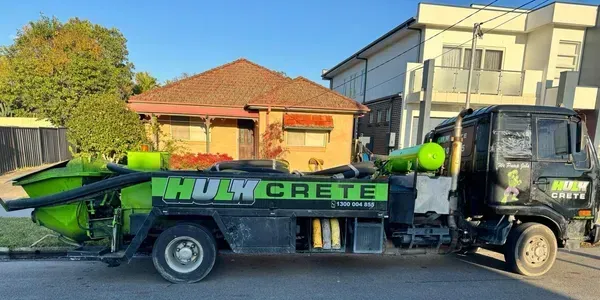
Hulkcrete Pumping operates a brand-new 36-metre unit for concrete boom pump hire across the Gold Coast and wider South East Queensland service area.
What is a concrete line pump?
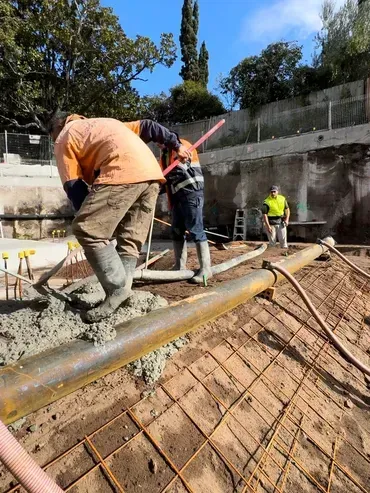
A line pump moves concrete through connected hoses or pipes laid between the pump and the placement area. The route can be planned around structures, through narrower access points, or across areas where direct boom placement is not practical.
Line pumping may be suitable for restricted-access sites, internal or rear placement areas, footings, selected slabs, and projects where the pump needs to remain away from the immediate pour location.
The line distance, number of bends, changes in elevation, concrete mix, clean-out arrangements, and access along the route should all be reviewed before the pour.
Learn more about concrete line pump hire for sites where access or placement distance shapes the pumping method.
When a boom pump may be the better fit
A boom pump may suit the project when there is enough stable setup space and the placement areas fall within practical reach. It can reduce the need for extensive ground line runs and support controlled placement across several areas from one position.
This can be useful on commercial and civil sites where the crew needs to move through a planned sequence and the pump operation must fit around concrete truck deliveries, other contractors, and active work zones.
Boom pumping may also suit pours where speed of repositioning matters, provided the site allows the equipment to be set up safely.
When a line pump may be the better fit
A line pump may be more suitable where direct boom access is limited by structures, narrow entries, overhead hazards, or the location of the pour. It can provide a practical route to rear areas, internal zones, footings, and other placement points beyond direct boom reach.
Line pumping requires more planning along the route. The site team may need to clear paths, protect completed work, manage line movement, and ensure an appropriate clean-out area is available.
The method can still be highly effective, but the suitability depends on the distance, route, concrete volume, and project conditions.
Compare the two methods
- Setup space: Boom pumps require suitable truck and stabiliser space. Line pumps may work from a more remote position, but still need practical vehicle access.
- Reach: Boom pumps provide reach through the placing boom. Line pumps rely on the planned hose or pipe route.
- Site movement: Boom placement can reduce ground lines across the work area. Line routes may require active management during the pour.
- Restricted access: Line pumping can support placement beyond structures or through narrower routes.
- Planning: Both methods require access, concrete supply, washout, hazards, and pour sequencing to be considered.
Consider the type of project
On commercial concrete pumping projects, the method may be influenced by slab layout, structural elements, working space, neighbouring trades, and concrete delivery timing.
For civil concrete pumping, ground conditions, road access, staged works, excavations, infrastructure elements, and active plant movements may shape the setup.
Footings, foundations, hardstands, road bases, and selected slabs can potentially use either method. The right choice depends less on the label of the project and more on the actual site conditions.
Information that helps determine the right setup
Provide the pumping team with accurate information early so the project can be reviewed properly. Useful details include:
- Project address and proposed pour date
- Type of pour and expected concrete volume
- Site plans, photographs, and placement distances
- Access width, turning space, and ground conditions
- Overhead powerlines, structures, trees, or scaffolding
- Expected boom position or proposed line route
- Concrete truck access and delivery sequence
- Washout and clean-out arrangements
Sharing this information before the booking helps identify whether a boom pump, line pump, or a different approach is more practical.
Do not choose by reach alone
Reach is important, but it is only one part of the decision. A boom may technically reach the placement area but still lack a safe setup position. A line route may appear simple but become impractical because of distance, bends, obstructions, or limited clean-out access.
The pumping method should support the whole pour, including the concreting crew, concrete deliveries, site traffic, safety controls, and placement sequence.
Discuss the site before confirming the pump
There is no single pumping method that suits every construction site. A practical decision is based on the actual access, setup area, placement location, concrete volume, and project program.
Explore Hulkcrete Pumping’s full range of concrete pumping services to understand the available options. To discuss whether boom or line pumping may suit your next project, contact the Hulkcrete Pumping team with the site details, plans, and proposed pour information.