How to prepare a site for concrete pumping
A concrete pour can lose time quickly when access, setup space, delivery movements, or placement requirements have not been considered beforehand. Preparing the site does not need to be complicated, but the pump operator, concreting crew, concrete supplier, and site supervisor should be working from the same basic plan.
This checklist explains the information that should be reviewed before concrete arrives. It is relevant to commercial and civil projects using boom pump hire or line pump hire across the Gold Coast and South East Queensland.
Confirm the pour details early
Start with the project address, preferred date, expected start time, estimated concrete volume, and the type of pour being completed. The pumping provider should also know whether the work involves a slab, footing, foundation, hardstand, road base, structural element, or another application.
Plans, site photographs, and estimated placement distances can help clarify the requirements. On staged projects, explain whether the pump will need to serve several placement areas or remain in one position throughout the pour.
Clear information allows the pumping method to be assessed before the booking is confirmed. It also gives the site team time to address any access or setup limitations rather than discovering them when concrete trucks are already arriving.
Check access for the pump and concrete trucks
The pump needs a practical route into the site and enough space to enter, position, and leave safely. Check gate widths, turning areas, gradients, soft ground, overhead services, nearby structures, parked vehicles, stored materials, and other equipment that may restrict movement.
Concrete truck access is equally important. The trucks need to approach the pump, discharge safely, and move away without blocking active work areas or creating unnecessary delays for later deliveries.
On busy commercial or civil sites, traffic movements may need to be coordinated with other contractors. A nominated site contact can help manage vehicle arrivals and keep the access route clear.
Prepare a stable setup area
A boom pump requires a suitable setup position with enough room for the truck and its stabilising equipment. The ground must be appropriate for the load, and the setup area should be separated from excavations, unstable edges, underground services, and active vehicle routes.
The available boom reach depends on where the pump can be positioned safely. A location that appears close to the pour may not be suitable once ground conditions, structures, overhead hazards, and exclusion zones are considered.
For advice on reach and site positioning, explore Hulkcrete Pumping’s 36-metre concrete boom pump hire service.
Plan the line route where line pumping is required
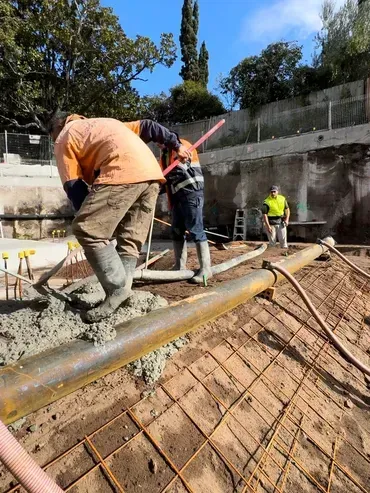
Line pumping can support placement areas that cannot be reached directly by a boom. Before the pour, identify the expected line distance, route, bends, changes in elevation, access through structures, and any areas where the line could interfere with workers or site traffic.
The route should provide practical access for placing, moving, and cleaning the line. It may also be necessary to confirm what site personnel will be available to assist with line handling during the pour.
Learn more about concrete line pump hire for restricted-access and longer-distance placement.
Review overhead and surrounding hazards
Powerlines, structures, scaffolding, cranes, trees, and nearby work zones can affect pump positioning and boom movement. These hazards should be identified before setup begins so the pump can be located appropriately and the work area controlled.
The site team should establish any required exclusion zones and prevent unrelated workers or vehicles from entering the operating area. Safe access should remain available for the concreting crew without placing them within unnecessary plant movement zones.
Coordinate concrete supply and pour sequencing
The concrete delivery schedule should reflect the pumping rate, placement requirements, and capacity of the concreting crew. Trucks arriving too closely together may congest the site, while large gaps between loads can interrupt the pour and leave crews waiting.
Discuss where concrete will be placed first, how the crew will move through the work area, and whether the pour contains separate stages. This is particularly important for commercial concrete pumping and civil concrete pumping, where the pump operation must fit into a wider construction program.
Confirm washout and clean-out arrangements
The site needs an appropriate area for pump and line clean-out. This should be considered before the pour rather than left until pumping is complete. The location must be practical for the equipment and consistent with the site’s environmental and waste-management arrangements.
Where a long ground line is being used, the clean-out process and access along the route should also be discussed. Materials, equipment, or completed work should not obstruct the required area.
Brief the people involved
Nominate a site contact who understands the pour and can communicate with the pump operator, concreting crew, and concrete supplier. The operator should know who is directing placement and who can make decisions if site conditions differ from the original plan.
A short pre-pour discussion can confirm the placement sequence, communication method, exclusion areas, truck movements, and any changes since the booking was made.
Use a practical pre-pour checklist
- Confirm the address, date, start time, application, and concrete volume.
- Provide relevant plans, photos, and placement distances.
- Clear access for the pump and concrete trucks.
- Confirm stable setup space and identify overhead hazards.
- Plan the boom reach or ground line route.
- Coordinate truck intervals and the placement sequence.
- Establish washout and clean-out arrangements.
- Nominate a site contact and brief the crew.
Plan the pump setup before concrete arrives
Good preparation helps the pumping operation fit into the wider project rather than becoming a last-minute constraint. The right setup will depend on the site, placement area, concrete volume, access, and planned sequence.
Explore Hulkcrete Pumping’s concrete pumping services to compare the available options. To discuss an upcoming pour on the Gold Coast, in Brisbane, or elsewhere across the service area, contact the Hulkcrete Pumping team with your site details.